Data Visualization

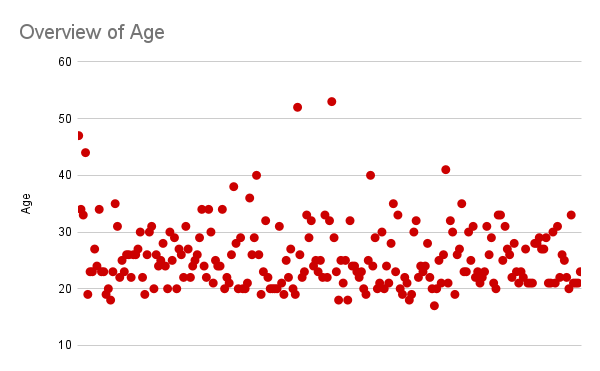
Overview of Age (Scatter Plot)

The scatter plot shows that most nurse trainees are registered in their early twenties, showing historical recruitment patterns on how the older, married individuals were replaced and favored young, unmarried women. (Baly, 1995, p. 125). Nursing institutions preferred younger candidates, believing they could be more easily molded into the discipline required by the profession (Godden, 2020).
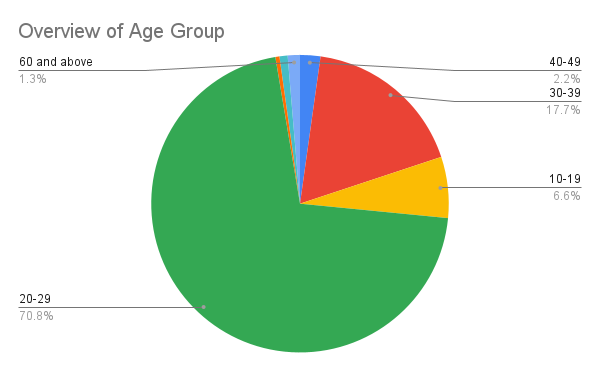
Overview of Age Group (Pie Chart)

The pie chart reveals that the majority of entrants were between 20–29 years old, reinforcing age expectations for new recruits. Youth was prized for physical endurance, trainability, and the potential for a long service career (Summers, 1988, p. 137). Nursing institutions emphasized molding young women into ideal caregivers aligned with Victorian gender norms (Baly, 1995, p. 84).

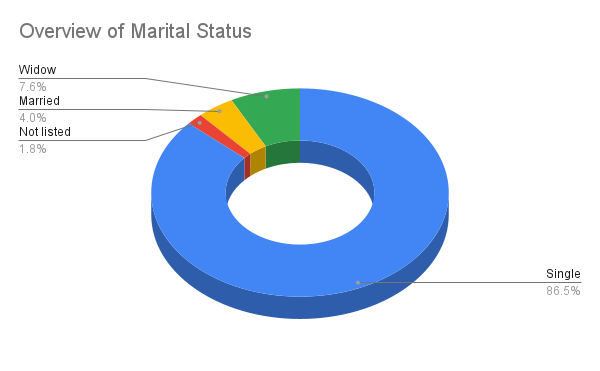
Overview of Marital Status (Donut Chart)

The chart indicates a predominance of single women among trainees, which reflects institutional policies discouraging married women from nursing. Marriage was seen as incompatible with the full devotion expected of nurses (Summers, 1988, p. 141). Nursing was closely tied to notions of feminine virtue, which were thought to be compromised by marriage and motherhood (Baly, 1995, p. 87).

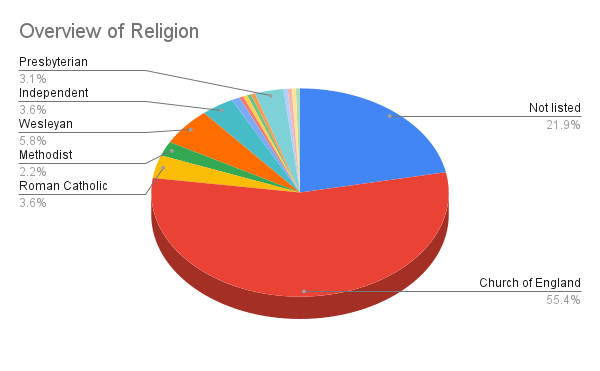
Overview of Religion (Pie Chart)

Most trainees identified with the Church of England, reflecting the strong intertwining of Anglican values with nursing education. Religious morality was central to early professional training, and Protestant ideals particularly shaped expectations of duty, purity, and self-sacrifice (Baly, 1995, p. 86). Recruitment often favored those aligned with dominant religious denominations (Summers, 1988, p. 133).

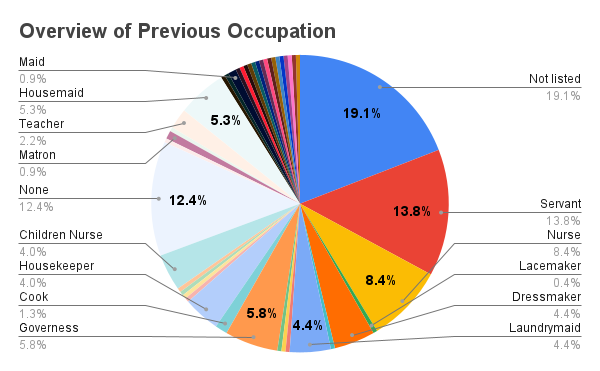
Overview of Previous Occupation (Pie Chart)

Many nurse trainees had prior roles as servants, housekeepers, or laundresses, underscoring nursing's appeal as upward mobility for working-class women. Domestic service was seen as providing the discipline, deference, and work ethic needed in hospital nursing (Godden, 2020, p. 109). This background also aligned with the gendered expectations of obedience and cleanliness (Summers, 1988, p. 135).

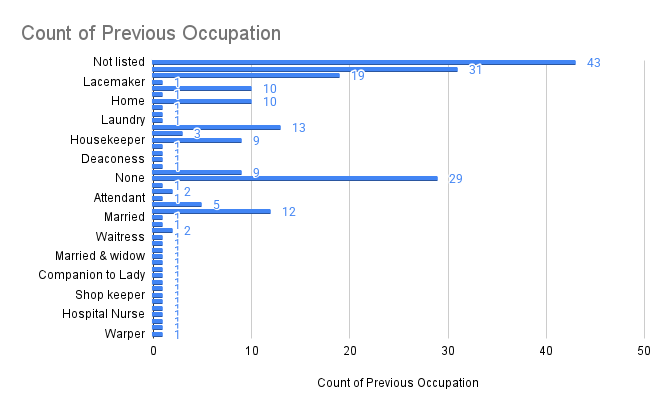
Count of Previous Occupation (Bar Graph)

The highest number of previous occupations listed are "Servant," "Nurse," and "Laundress," reflecting working-class origins and gendered labor expectations. Previous service roles were seen as ideal preparation for the discipline and demands of hospital life, shaping the early professional identity of nurses (Godden, 2020, p. 109). These occupational backgrounds also highlighted the gendered pathway into caring professions (Bradshaw, 2001, p. 101).

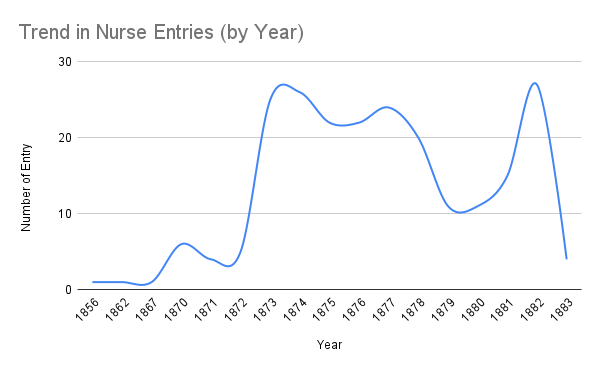
Trend in Nurse Entries by Year (Line Graph)

The line graph shows significant rises and dips in nurse entries, with increases around wartime periods. External factors like World War I heightened the demand for trained nurses, encouraging rapid expansions of training programs (Godden, 2020, p. 118). Recruitment drives during these periods often relaxed entry requirements to meet urgent healthcare needs (Bradshaw, 2001, p. 108).

Overview of Cause of Leaving (Pie Chart)

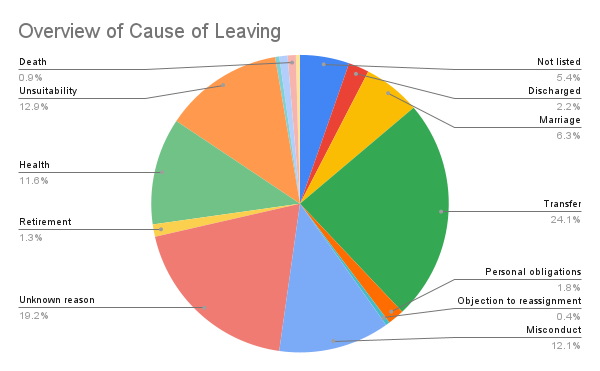
The distribution of causes of leaving, from marriage to misconduct, reflects both personal choices and institutional enforcement of norms. Many left due to social conventions or rigid disciplinary expectations (Summers, 1988, p. 146). "Not strong enough" and "unsuitable for nursing" judgments also mirrored subjective evaluations of women’s moral and physical fitness (Godden, 2020, p. 115).

Reasons for Leaving (Pie Chart)

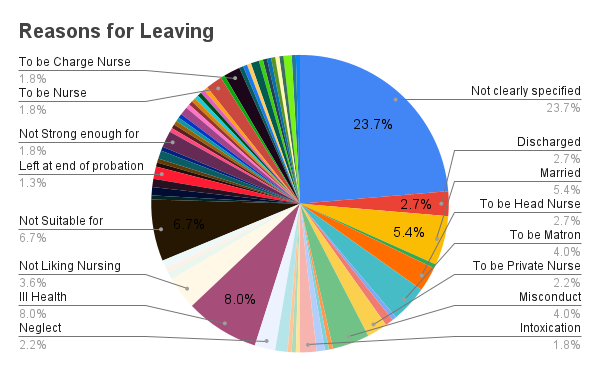
The chart reveals that marriage and health issues were common reasons for leaving the profession. Many women resigned upon marriage due to institutional rules or societal pressures (Bradshaw, 2001, p. 104). Additionally, the demanding physical labor and exposure to illness often led to premature departures for health reasons (Baly, 1995, p. 89).

Type of Misconduct (Pie Chart)

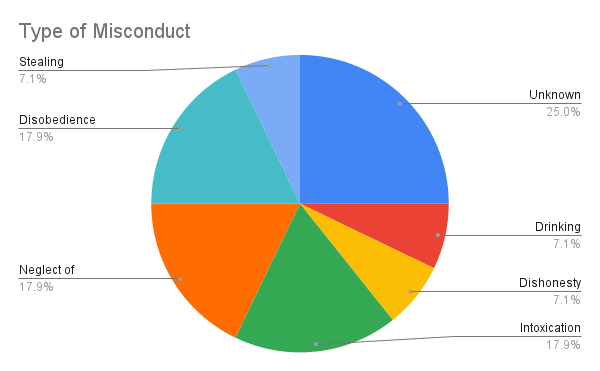
Misconduct cases, predominantly classified as general misconduct, disobedience, and drinking, illustrate the strict moral codes imposed on nurses. Early nursing was heavily concerned with personal morality, believing character flaws could reflect poorly on institutional reputation (Summers, 1988, p. 150). Drinking and insubordination were particularly stigmatized offenses (Baly, 1995, p. 92).

Type of Transfer (Bar Graph)

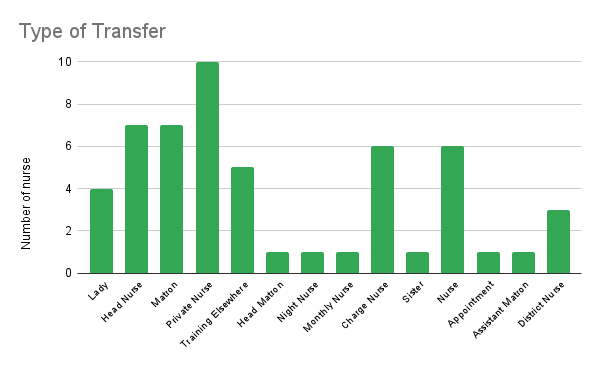
The bar graph shows that nurses frequently moved between hospitals and infirmaries, which may indicate that early nursing careers were flexible but often unstable. These transfers were usually due to staffing needs or opportunities for career advancement (Godden, 2020, p.114)/ Additionally, the frequent movement shows the unstable nature of employment for working-class women in healthcare (Bradshaw, 2001, p.102).

Reddit Nurse forum answers to:

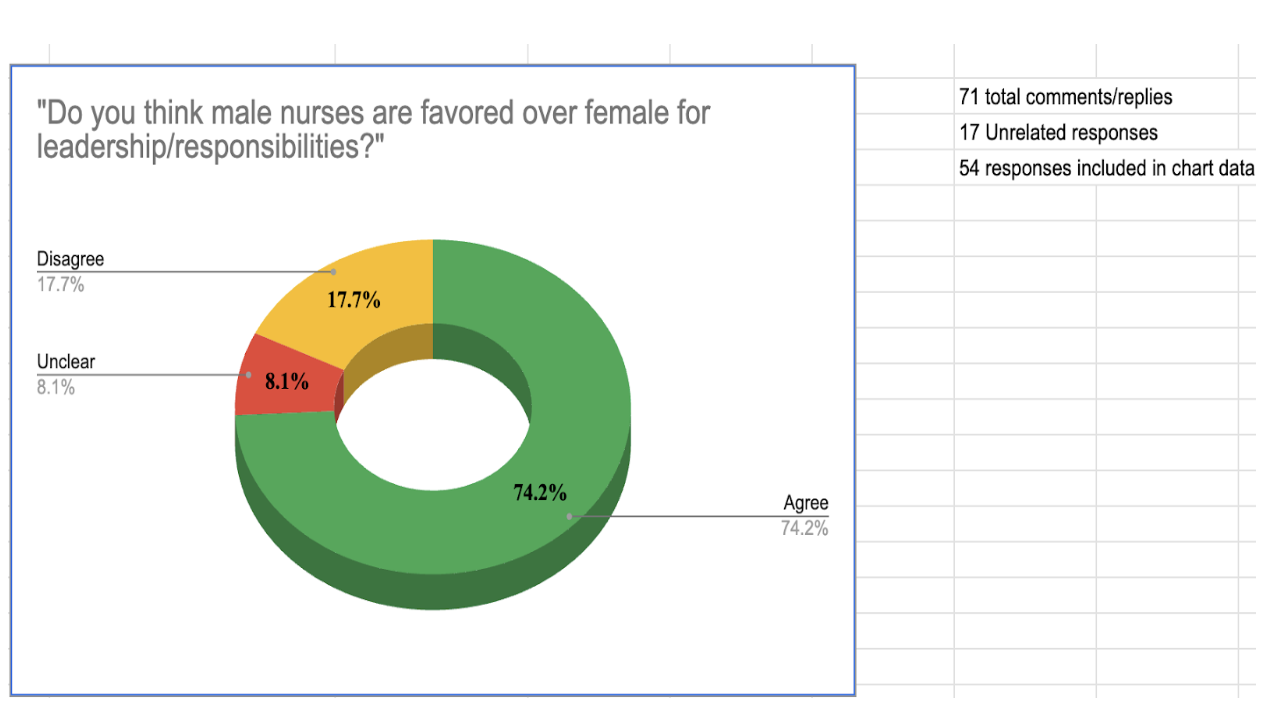
"Do you think male nurses are favored over female for leadership/responsibilities?"

The pie chart shows a clear gap in how people perceive gender bias in nursing leadership. A large majority, that being 74.2% of respondents, believe that male nurses are favored over female nurses when it comes to leadership roles and responsibilities. In contrast, only 17.7% disagreed, and 8.1% gave unclear answers. These insights, drawn from 54 responses in a nursing forum discussion, mirror broader research that points to an ongoing issue: even though nursing is a female-dominated profession, male nurses still seem to have an edge when it comes to advancing their careers (Teresa-Morales et al., 2022). It’s a reminder that gender-based discrimination remains deeply rooted in nursing today, which just echoes the same struggles that were present back in the Victorian era (Biurrun-Garrido et al., 2024,).